Abandoned & Little-Known Airfields:
Northern Idaho
© 2002, © 2022 by Paul Freeman. Revised 6/27/22.
This site covers airfields in all 50 states: Click here for the site's main menu.
____________________________________________________
Please consider a financial contribution to support the continued growth & operation of this site.
____________________________________________________
Henley Aerodrome (S62), Athol, ID
47.91, -116.71 (Northeast of Spokane, WA)
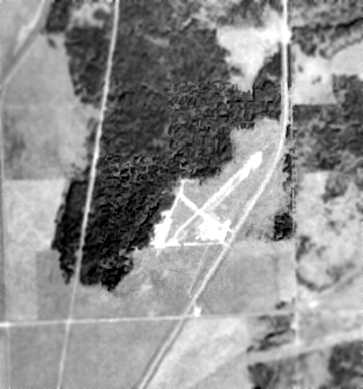
Henley Aerodrome, as depicted on a 9/19/76 aerial photo.
This general aviation airport was not yet depicted at all on a 1966 aerial photo nor or the 1967 USGS topo map,
nor listed in the November 1972 Flight Guide (according to Chris Kennedy).
According to Heather Hart, “Henley Aerodome was founded in 1973 as posted on [Clayton] Henley's grave stone.”
The earliest reference which has been located to the Henley Aerodrome
was its listing in the 1976 AOPA Airport Directory (according to Chris Kennedy).
The earliest depiction which has been located of the Henley Aerodrome was a 9/19/76 aerial photo.
It depicted Henley as having a single northeast/southwest runway.
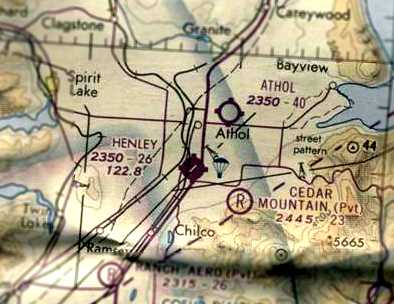
The earliest aeronautical chart depiction which has been located of the Henley Aerodrome
was on the July 1977 Great Falls Sectional Chart (courtesy of Chris Kennedy).
It depicted Henley as a public-use airport with a single 2,600' paved northeast/southwest runway,
and indicated that parachute operations were conducted at the field.
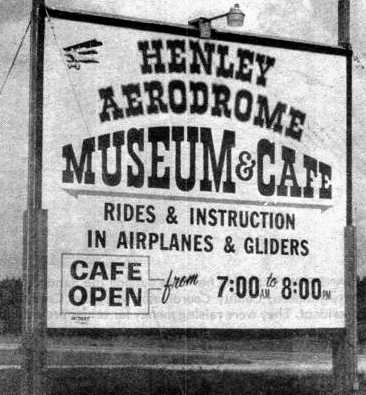
An undated photo of a sign for the Henley Aerodrome Museum & Cafe,
advertising “Rides & instruction in airplanes & gliders.”
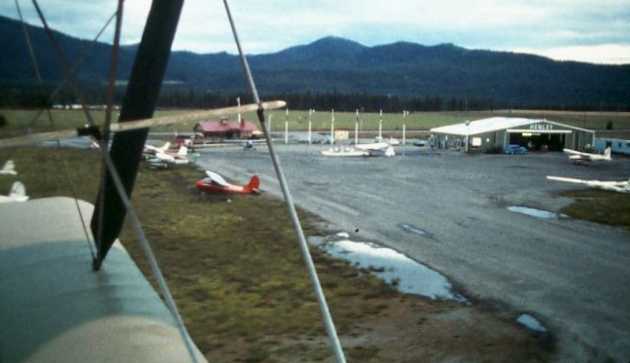
A circa 1970s aerial view of the Henley Aerodrome by Montgomery Stewart.
Montgomery recalled, “Henley took me up one afternoon in the 1970s in a Dehaviland Tiger Moth.”
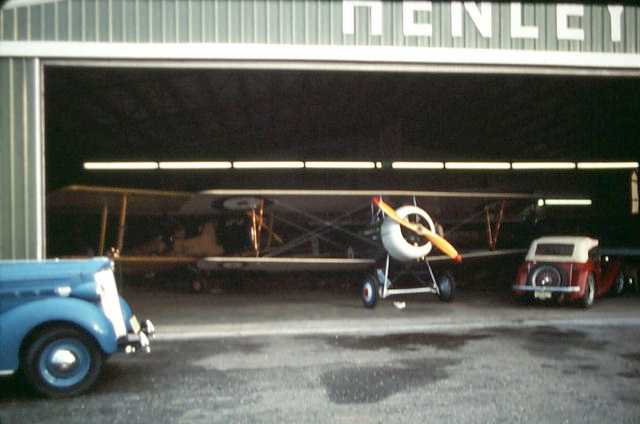
A circa 1970s photo by Montgomery Stewart of several biplanes in a Henley Aerodrome hangar.
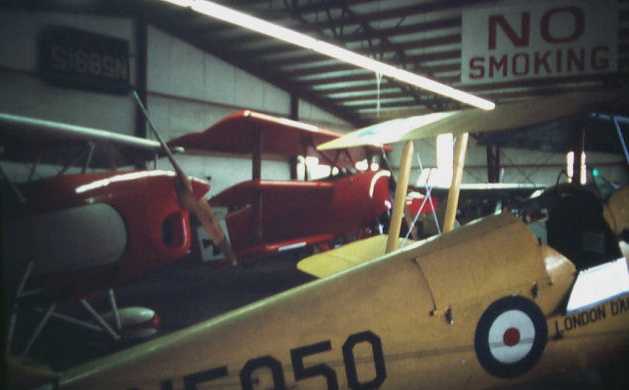
A circa 1970s photo by Montgomery Stewart of several biplanes inside a Henley Aerodrome hangar.
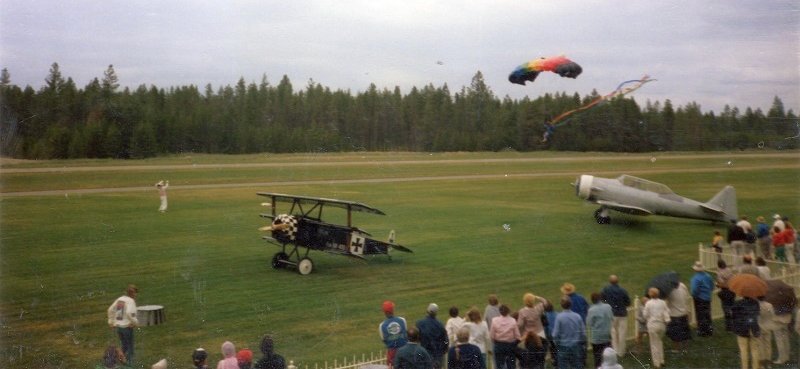
A circa 1970s photo (courtesy of Lee Corbin) of a Fokker Triplane replica, a skydiver, and a North American AT-6 Texan at a Henley Aerodrome airshow.
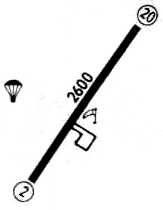
The November 1977 Flight Guide (courtesy of Chris Kennedy) depicted the Henley Aerodrome as having a single 2,600' paved Runway 2/20,
with a small ramp on the southeast side.
The field was depicted as conducting parachute operations.
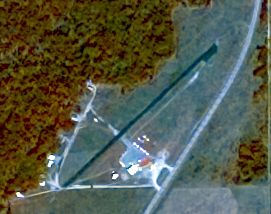
A 10/4/78 USGS aerial photo depicted Henley as having a single northeast/southwest asphalt runway.
In 1981 the airport was purchased by Gary Norton, founder of Spokane’s ISC Systems Corporation.
Described as “An avid pilot with a passion for vintage aircraft”, Norton sought his own airstrip & a place to store his growing collection of classic planes.
According to Wikipedia, in 1981 “Lengthening & other improvements are done to the airstrip. The hangar is turned into an air museum.”
The May 1981 Flight Guide (according to Chris Kennedy) described Hensley as having a 4,200' runway.
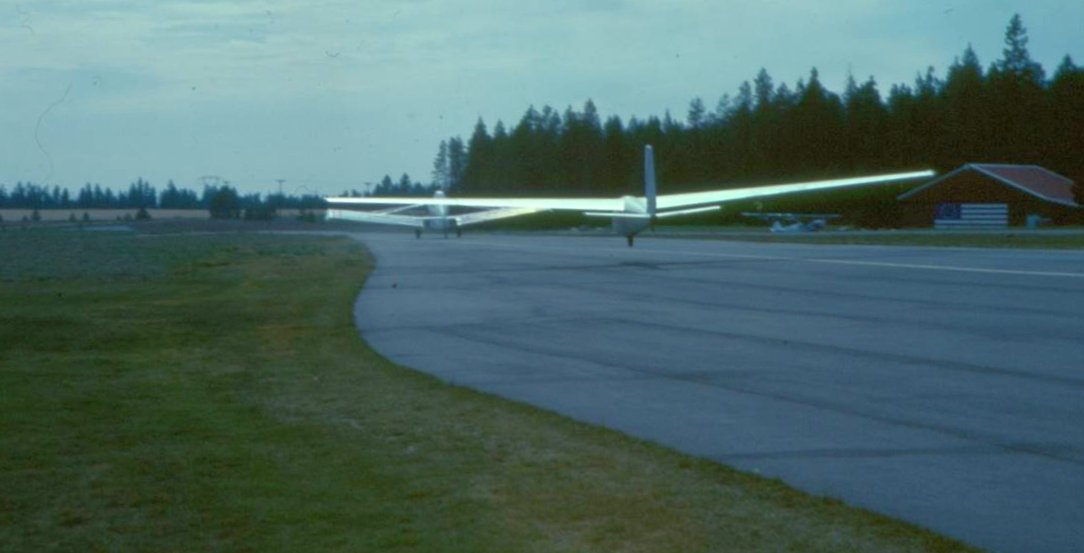
A 1983 photo of Frank Grindel being towed in a LET Blanik L-13 glider at Henley Aerodrome.
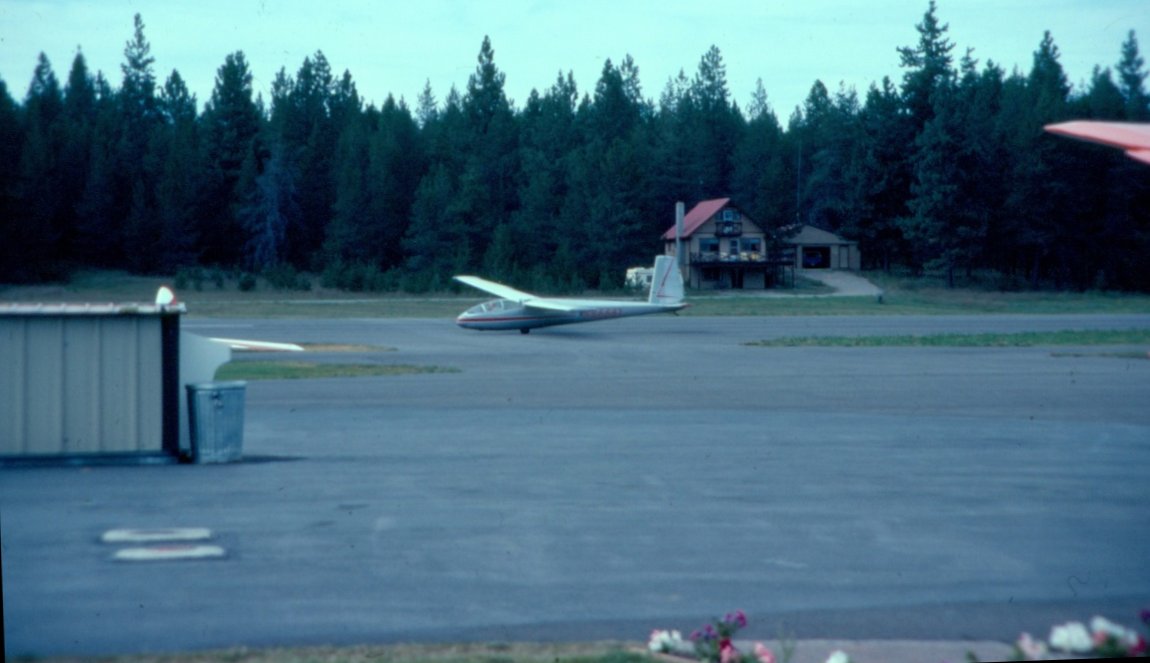
A 1983 photo of Frank Grindel flying a LET Blanik L-13 glider at Henley Aerodrome.
In 1986, after successfully outbidding Disney & others for an original 1915 Steam Engine Train,
Norton began thinking of his property as more than his own personal playground.
He imagined a transportation-inspired museum & theme park where people could see & appreciate all kinds of rare planes, trains, and automobiles.
As the park was being built, Norton changed the name to Silverwood in order to broaden the park’s appeal & pay homage to the region’s mining history.
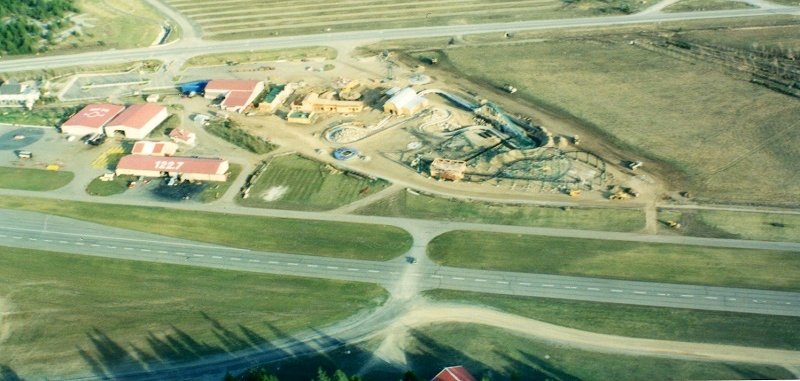
A mid-1980s aerial view looking east at the Henley Aerodrome, showing the runway in the foreground & 3 hangars on the left (one marked with the 122.7 UNICOM frequency).
It also showed the Silverwood Theme Park under construction just east of the runway.
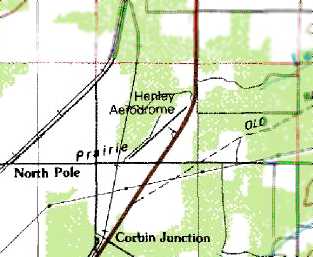
The 1987 USGS topo map depicted the Henley Aerodrome as having a single northeast/southwest runway.
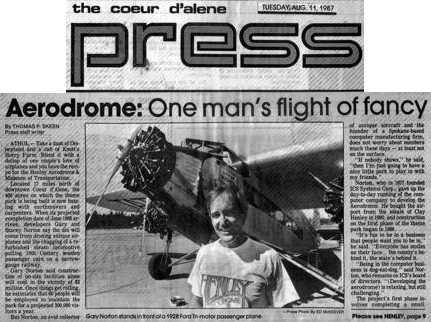
An article entitled “Aerodrome: One man's flight of fancy” appeared in the 8/11/87 Coeur D'Alene Press,
depicting owner Gary Norton in front of his Ford Trimotor.
The Silverwood Theme Park opened on 6/20/88.
Over 120,000 guests enjoyed the park’s unique Victorian-themed shops & restaurants, movie theater, and train rides that first season.
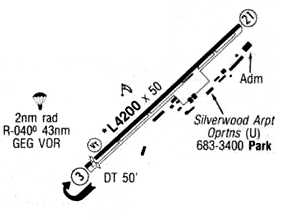
The May 1994 Flight Guide (courtesy of Chris Kennedy) depicted the Henley Aerodrome as having a single 4,200' paved Runway 3/31.
Additional improvements had been added since 1977, including a parallel taxiway, larger ramp, and multiple buildings.
The field was said to conduct operations of gliders, aerobatics, helicopters, banner towing, parachutes, and to have air shows.
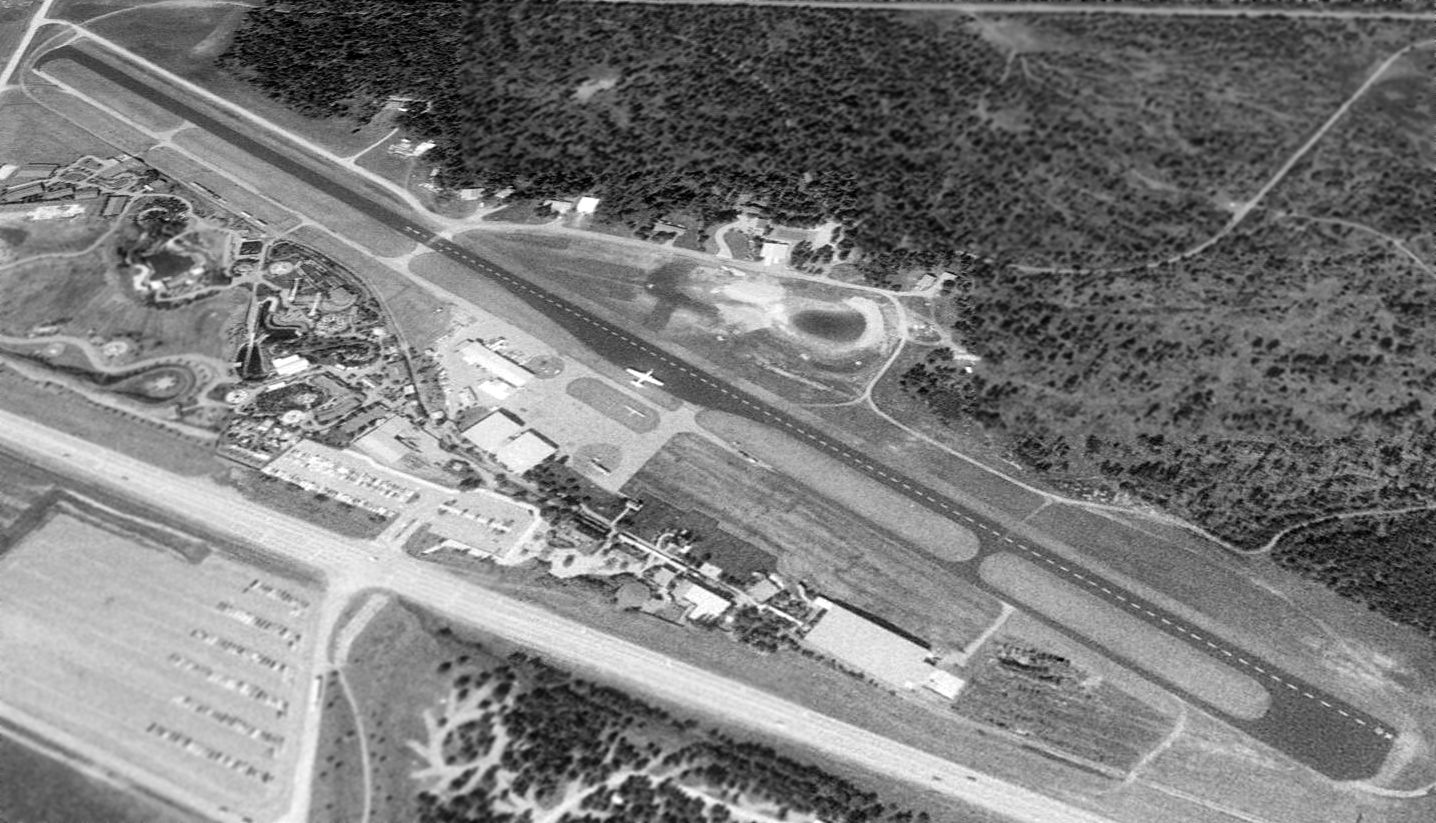
The last photo which has been located depicting the Henley Aerodrome while in operation was a 1998 USGS aerial view looking west.
The airfield had a single asphalt northeast/southwest runway with a parallel taxiway, and a ramp on the southeast side with several hangars.
Note the large aircraft parked on the southeast side of the midpoint of the runway – Gary Norton's Ford Trimotor?
The Silverwood Theme Park occupied land on the south side of the airport at this point, but had not yet expanded to cover the airport.
According to Heather Hart, “Mr. Norton purchased the airstrip from him and founded Silverwood after selling his banking software in the 1980s.”
The Henley Aerodrome was evidently closed at some point between 1998-2003.
In 2003, the Boulder Beach Water Park opened. Unfortunately, this expansion covered the northeast end of the runway.
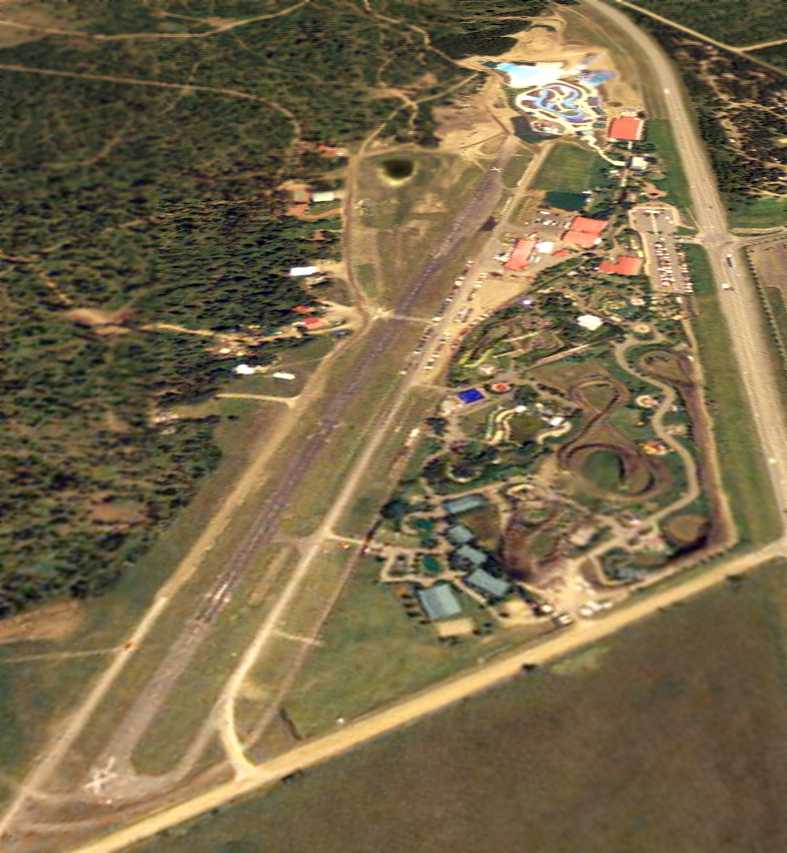
A 2004 aerial view looking northeast along the former Henley Aerodrome runway, showing it marked with closed-runway “X” symbols.
The far end of the runway had been covered by the Boulder Beach theme park.
But the majority of the length of the runway & taxiway remained intact, and it appeared as if the hangars remained standing as well.
A 6/19/04 article (courtesy of John Townsley) described how the Red Baron Pizza Squadron would be performing an aerobatic routine at Silverwood,
but it was not apparent whether the planes would be flying from the former Henley runway, or just doing aerobatics over the theme park.
The former Henley Aerodrome was depicted as an abandoned airfield on the 2008 Sectional Chart.
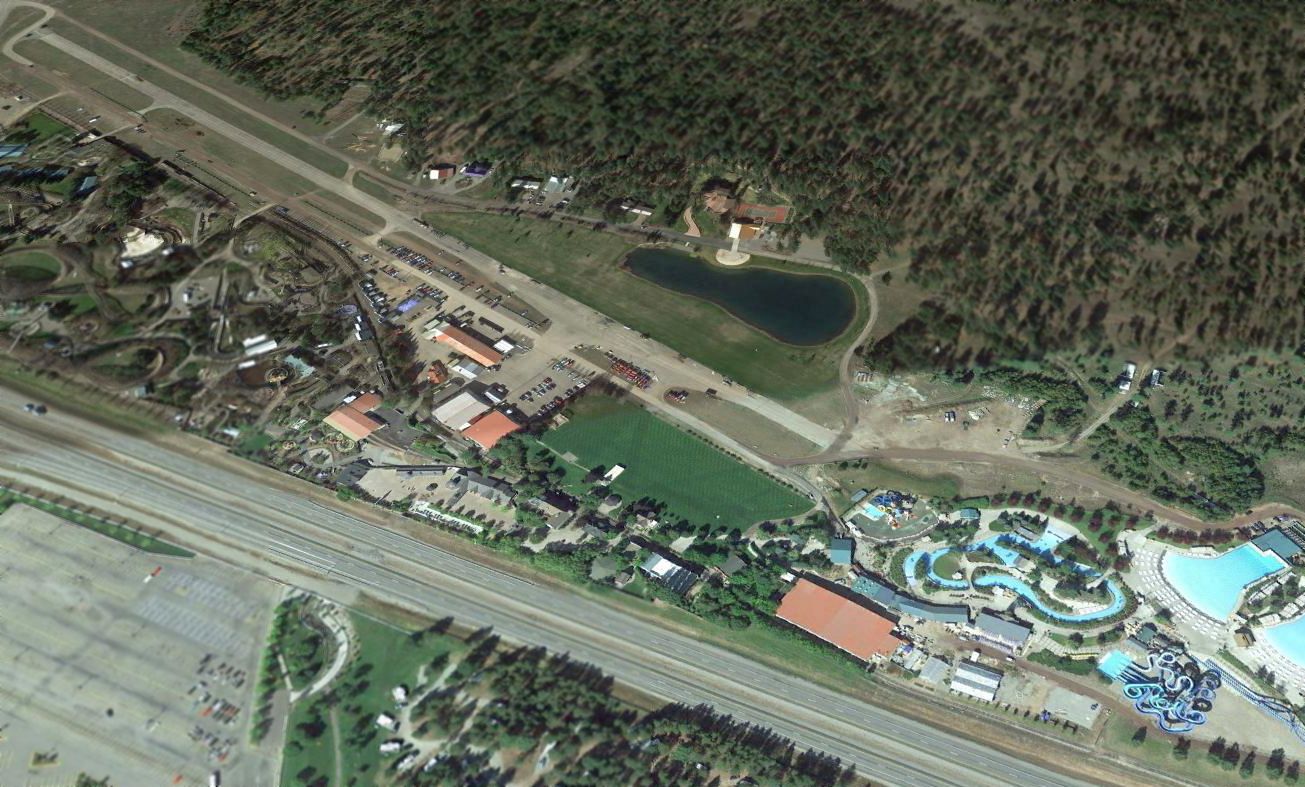
A 2016 aerial view looking west at the site of Henley Aerodrome, showing the majority of the runway remained intact, though the north end had been covered by the Boulder Beach theme park.
The 3 hangars remained standing as well.
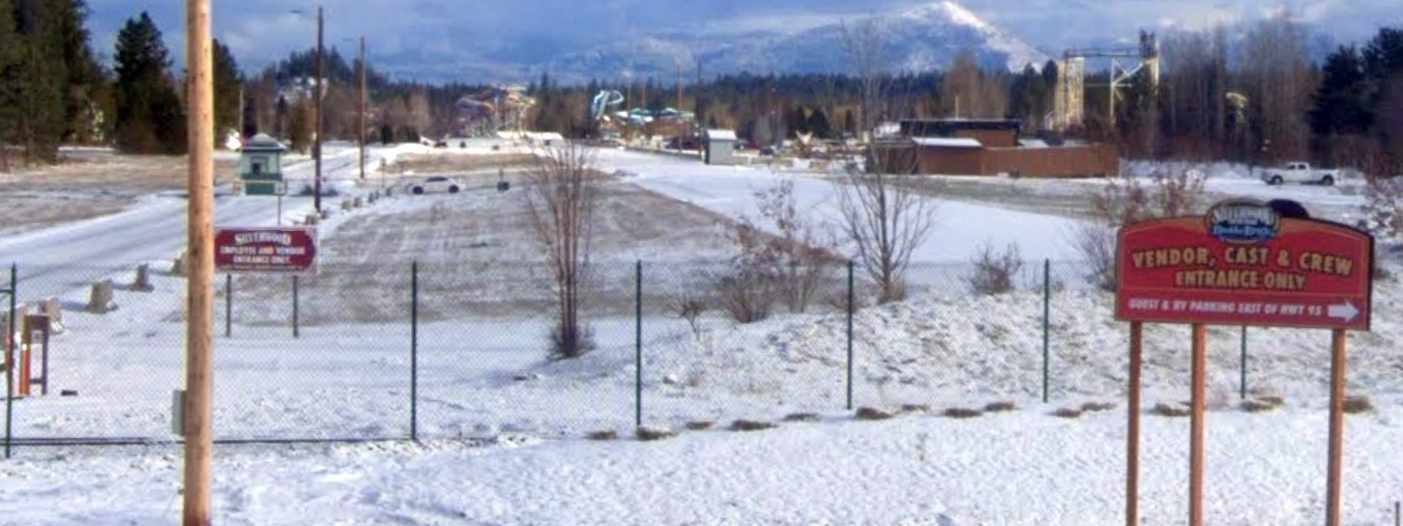
A December 2021 photo looking northeast along the former Henley Aerodrome Runway 3.
The site of Henley Aerodrome is located northwest of the intersection of Route 95 & East Brunner Road.
Thanks to Al Courtney for pointing out this airfield.
____________________________________________________
Or if you prefer to contact me directly concerning a contribution (for a mailing address to send a check),
please contact me at: paulandterryfreeman@gmail.com
If you enjoy this web site, please support it with a financial contribution.
____________________________________________________
This site covers airfields in all 50 states.