Abandoned & Little-Known Airfields:
Texas: Northwestern Corpus Christi area
© 2002, © 2024 by Paul Freeman. Revised 5/31/24.
This site covers airfields in all 50 states: Click here for the site's main menu.
____________________________________________________
Please consider a financial contribution to support the continued growth & operation of this site.
Beeville Airport (1st location) (added 2/4/21) - Beeville Airport (2nd location) / NAS Chase Field (revised 8/11/19) - (Original) Sinton Airport (revised 8/11/19) - Travland Airport (added 5/31/24)
____________________________________________________
(Original) Sinton Airport, Sinton, TX
28.04, -97.49 (North of Corpus Christi, TX)
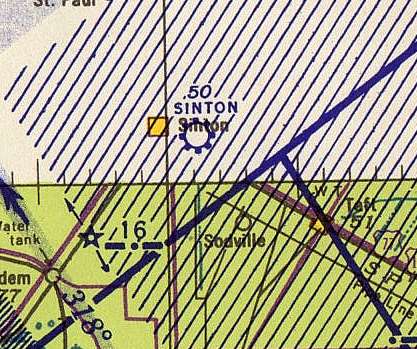
Sinton Airport, as depicted on the February 1943 Corpus Christi Sectional Chart (courtesy of Jim Stanton).
The original airport for the town of Sinton was located 2 miles east of the center of the town.
Sinton Airport was evidently established at some point between 1941-43,
as it was not listed among active airfields in the Airport Directory Company's 1937 Airports Directory (courtesy of Bob Rambo)
nor depicted on the June 1941 Corpus Christi Sectional Chart.
The earliest reference to Sinton Airport which has been located
was on the February 1943 Corpus Christi Sectional Chart (courtesy of Jim Stanton),
which depicted Sinton as a commercial or municipal airport, just east of the town.
The April 1944 US Army/Navy Directory of Airfields (courtesy of Ken Mercer)
described Sinton Airport as having an 1,800' unpaved runway.
Sinton Airport may have been temporarily closed during the later portion of WW2
(due to wartime security concerns & fuel rationing,
as was the case with many other small civilian airfields during the war),
as it was not depicted at all on the July 1945 San Antonio Sectional Chart (according to Chris Kennedy),
and it was not listed among active airfields in the 1945 AAF Airfield Directory (courtesy of Scott Murdock).
David Brooks recalled, "I remember it being there in 1945 when we moved to a town nearby (Ingleside).
I remember there being several corrugated tin hangars, wooden buildings, and a rotating light on about a 25’ tower."
Sinton Airport had apparently been reopened at some point between 1945-49,
as it was depicted on the January 1949 San Antonio Sectional Chart (courtesy of Chris Kennedy),
and described as having a 3,500' unpaved runway.
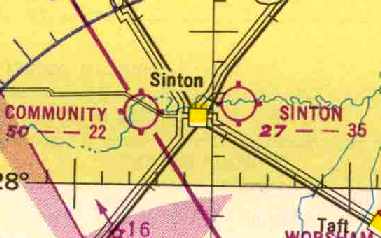
The February 1950 San Antonio Sectional Chart (courtesy of David Brooks)
described Sinton as having 3 unpaved runways, with the longest being 3,500'.
The airport was said to offer fuel & major repairs.
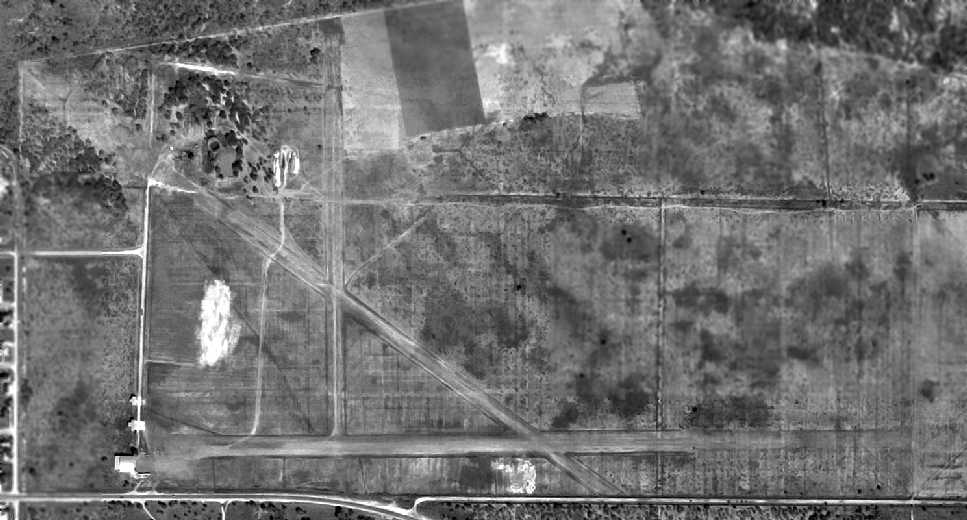
A 12/21/51 U.S. Government aerial view of Sinton Airport (courtesy of Brian Rehwinkel)
depicted the field as having 3 unpaved runways..
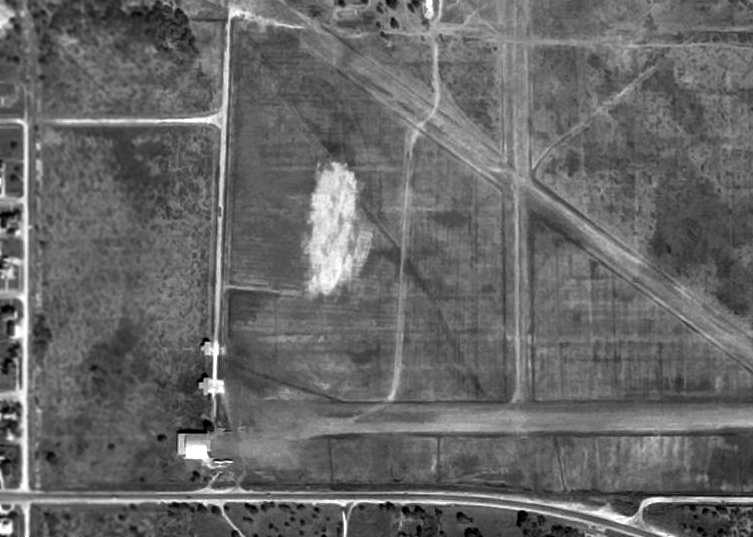
A closeup from the 12/21/51 U.S. Government aerial view of Sinton Airport(courtesy of Brian Rehwinkel),
showing 2 light aircraft next to the hangar on the southwest corner of the field.
A 1952 TX road map (according to David Brooks) did not yet depict Texas Route 881,
which was presumably the reason for the airport's closure within a few years,
when Route 881 was built through the center of the airport property.
Larry Dunbar recalled, “I can just barely remember the old Sinton Airport as a kid.
It was the first time I ever got close to an airplane, a J-3 Cub.
I believe it was owned by Nugget Gold, his mother was my first grade teacher.
My Dad took me out to see it, and I recall we went east of Sinton, out where the High School is today.”
The original Sinton Airport had apparently gained a paved runway at some point between 1951-54,
as the August 1954 World Aeronautical Chart (courtesy of Chris Kennedy)
depicted the field as having a 4,000' hard-surface runway.
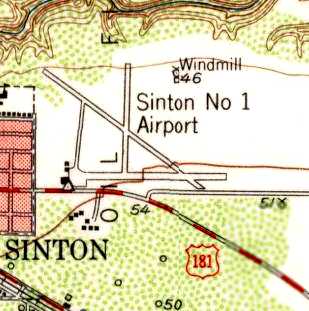
The 1954 USGS topo map depicted the “Sinton #1 Airport” as having 3 paved runways,
with 3 small buildings on the southwest side of the field.
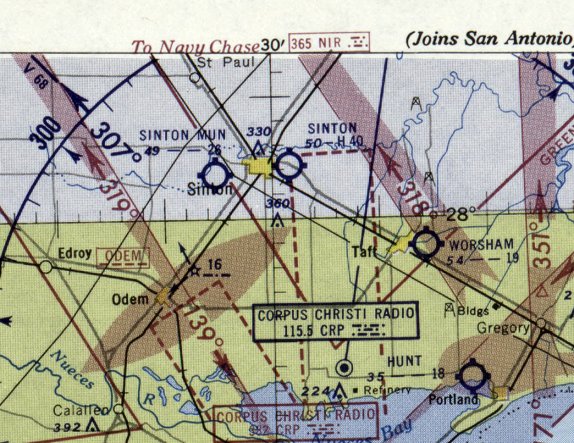
The last depiction which has been located of the original Sinton Airport was on the February 1955 Corpus Christi Sectional Chart.
It depicted the original Sinton Airport as having a 4,000' hard-surface runway.
The original Sinton Airport was evidently closed at some point between 1955-57,
as it was depicted as "Abandoned Airport" on the March 1957 San Antonio Sectional Chart.
A 1961 aerial photo showed that the original Sinton Airport had been abandoned.
Larry Dunbar recalled, “Later as a teen, I recall driving out behind the school & seeing remains of the runway, and at least one hangar still standing.
This was in 1971, the year I got my pilot's license. This was actually easier to spot from my truck than the 150.
The remains of the beacon were still there, too.”
The 1979 USGS topo map still depicted a rotating light beacon at the site of the the original Sinton Airport (according to David Brooks).
The 1995 USGS aerial photo showed that the middle of the site of the original Sinton Airport had been covered by Route 881.
There were the remains of several buildings on the site, but it is not known if these were related to the airport.
A school had been built to the northwest of the former airport site.
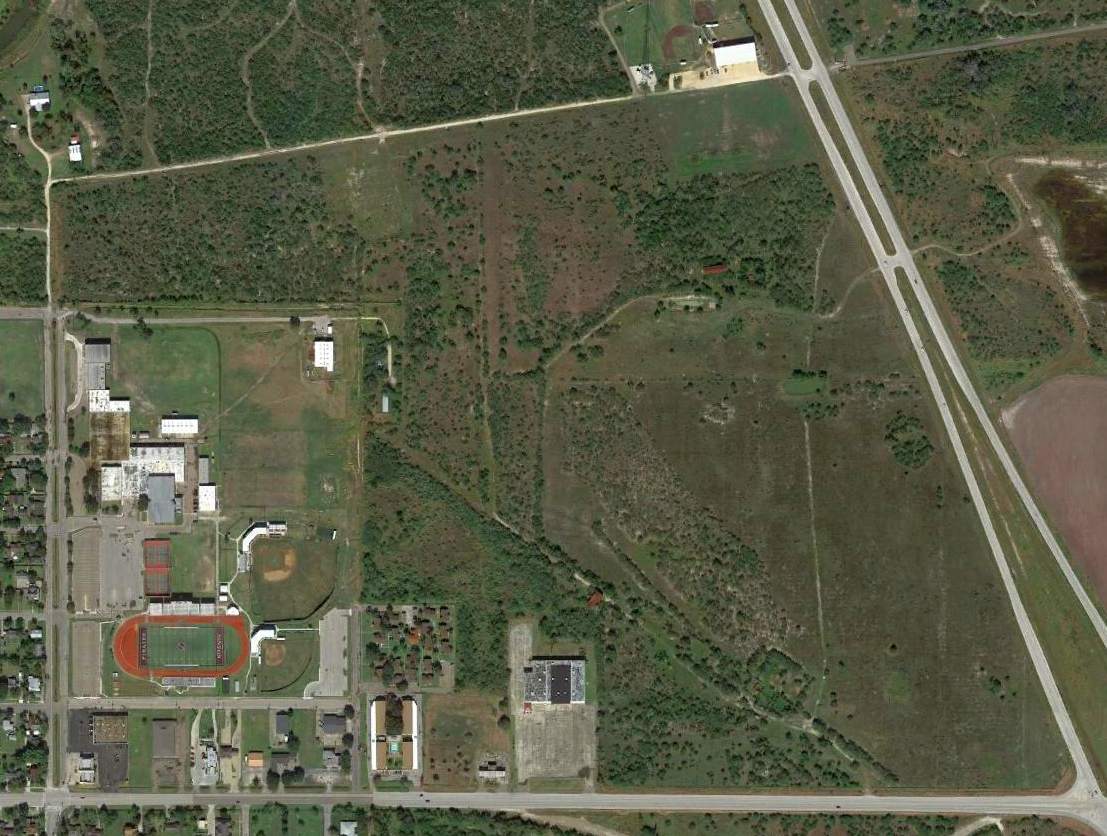
A 2014 aerial view of the site of the original Sinton Airport showed recognizable traces remaining of the alignment of the north/south & northwest/southeast runways.
The site of the original Sinton Airport is located north of the intersection of Route 881 & Route 181, two miles east of the center of Sinton, TX.
____________________________________________________
Beeville Airport (original location), Beeville, TX
28.419, -97.754 (North of Corpus Christi, TX)
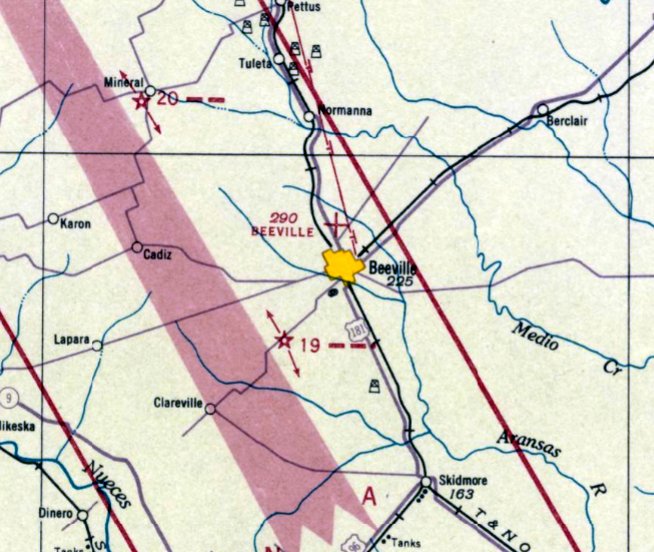
Beeville Airport, as depicted on the October 1938 San Antonio Sectional Chart.
The original airport for the town of Beeville was a short-lived facility located to the north of the town.
Beeville Airport was evidently established at some point between 1936-38,
as it was not yet depicted on the December 1936 San Antonio Sectional Chart.
The earliest depiction which has been located of Beeville Airport was on the October 1938 San Antonio Sectional Chart.
It depicted Beeville Airport as an auxiliary airfield.
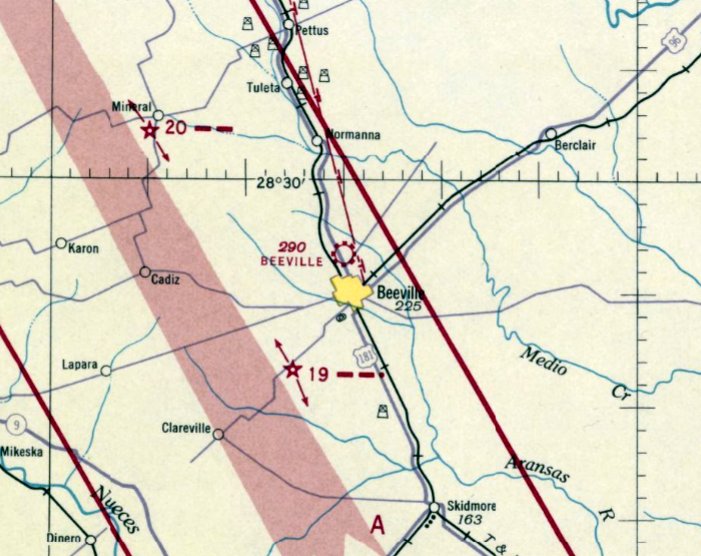
The last depiction which has been located of the original Beeville Airport (to the north of the town) was on the March 1940 San Antonio Sectional Chart.
It depicted Beeville Airport as a commercial/municipal airport.
The original Beeville Airport (to the north of the town) was evidently closed at some point between 1940-41,
as no Beeville Airport was depicted on the October 1941 San Antonio Sectional Chart.
In 1942 a larger replacement Beeville Municipal Airport was opened to the southeast of the town.
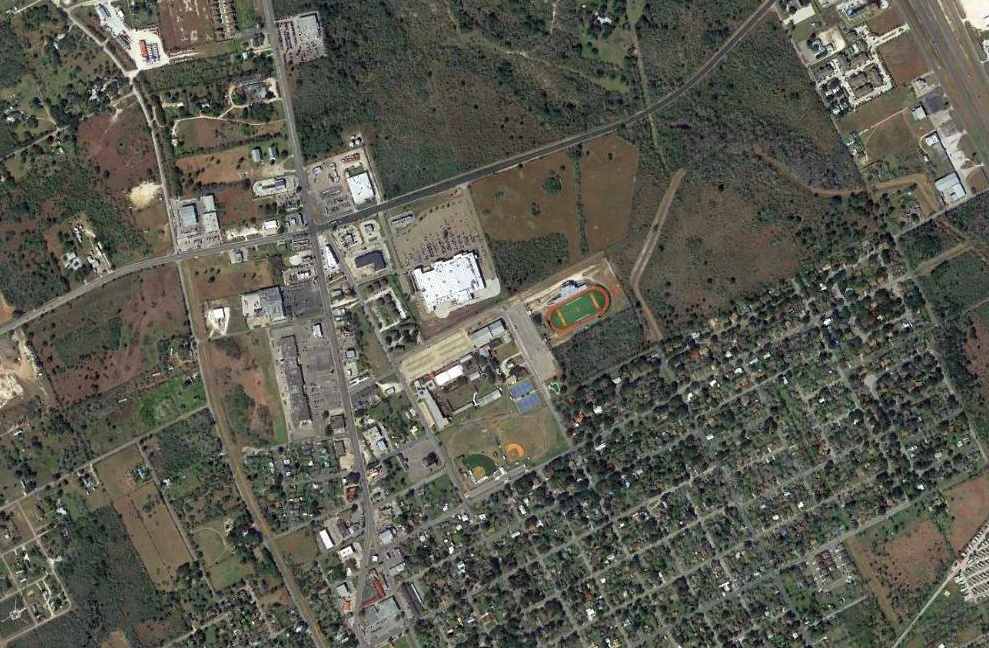
Although the precise location of the original Beeville Airport has not been determined, the overall area on the north side of the town shows no obvious trace of a former airfield.
____________________________________________________
Beeville Airport (2nd location) / NAS Chase Field, Beeville, TX
28.37, -97.66 (North of Corpus Christi, TX)
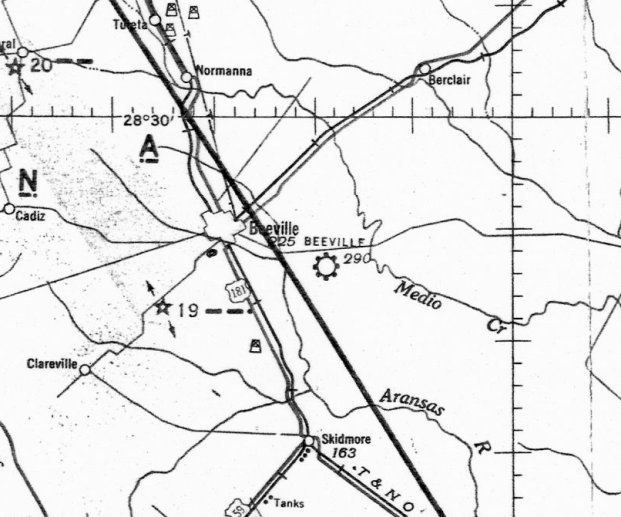
Beeville Municipal Airport, as depicted on the April 1942 San Antonio Sectional Chart (courtesy of Ron Plante).
No Beeville Airport was depicted on the October 1941 San Antonio Sectional Chart.
At some point between 1941-42, the second location of Beeville Airport was evidently established.
The earliest depiction which has been located of the Beeville Airport (to the southeast of the town) was on the April 1942 San Antonio Sectional Chart (courtesy of Ron Plante).
The land of Beeville Municipal Airport was leased to the Navy in 1943 for the construction of Chase Field, a training base for Naval Air Cadets.
It was used as one of 3 satellite airfields for Corpus Christi NAS.
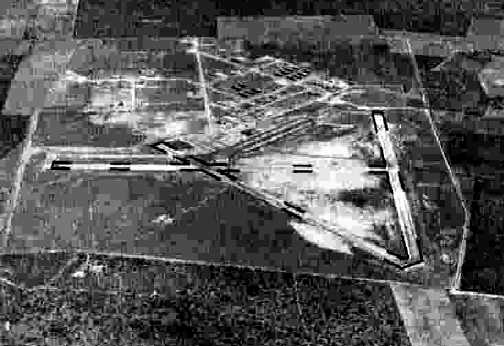
The earliest photo which has been located of Chase Field was a 10/25/43 aerial view from the 1945 AAF Airfield Directory (courtesy of Scott Murdock).
It depicted Chase Field as having 3 paved runways.
The 1943 San Antonio Sectional Chart (according to Chris Kennedy) labeled the field as "Chase (Navy)".
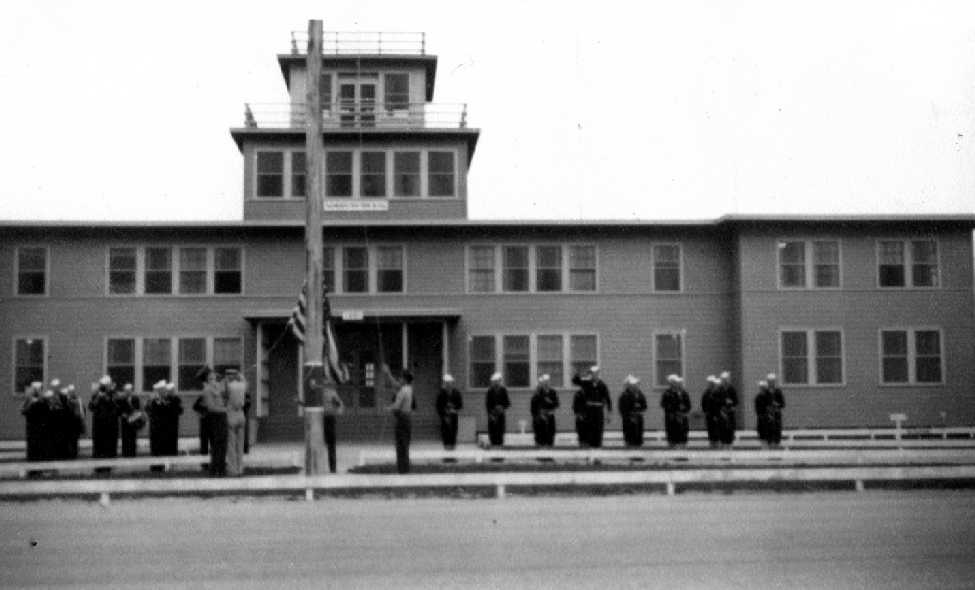
A circa 1943-44 photo of a flag-raising ceremony in front of Chase Field's administration building (courtesy of Don Kochi).
Don reported, the photo “came from old WW2 photo album that was falling apart.
The owner was a WW2 US Naval WAVES (female) assigned to Chase Field during 1943-44.”
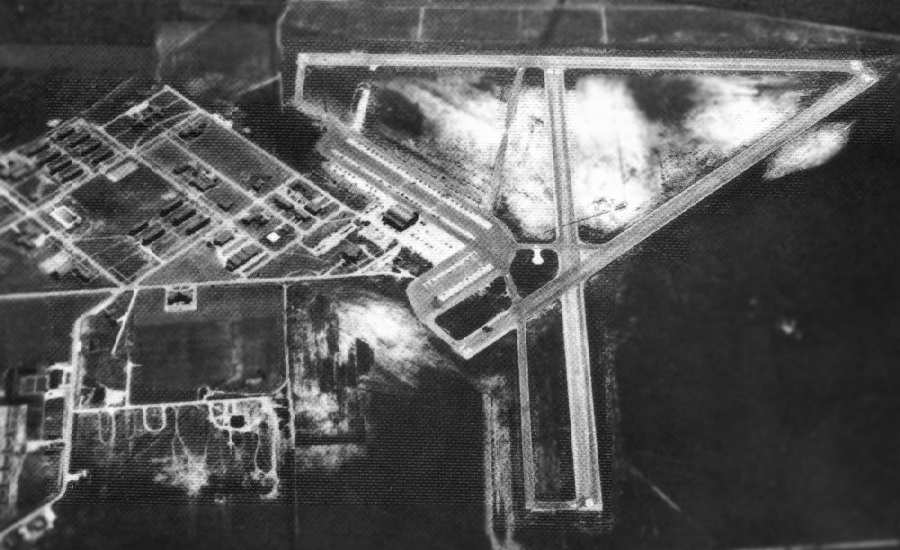
A 1944 aerial view looking east at Chase Field (National Archives photo).
The 1945 AAF Airfield Directory (courtesy of Scott Murdock) described Chase Field
as a 1,064 acre irregularly-shaped property having 3 asphalt runways, the longest being the 4,558' north/south strip.
The field was said to have a single 91' x 20' wooden hangar,
to be owned by the City of Beevile, and operated by the Navy.
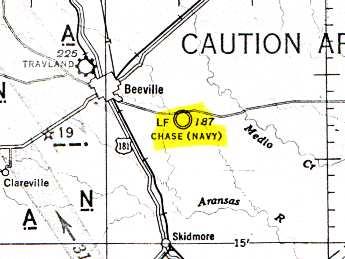
"Chase (Navy)", as depicted on the 1945 San Antonio Sectional Chart (courtesy of John Voss).
Chase Field was closed by the Navy in 1946.
The 1949 San Antonio Sectional Chart (according to Chris Kennedy) depicted as a civil field, "Chase",
and described it as having a 4,600' hard-surface runway.
The Chase Field property was used for a few months in 1947 as the temporary campus
of the Arts & Technological College (later to become Texas A & M University at Corpus Christi).
The base was reopened in 1953, due to the Korean War & the need for training in jet aircraft.
This resulted in a significant expansion of the original facilities.
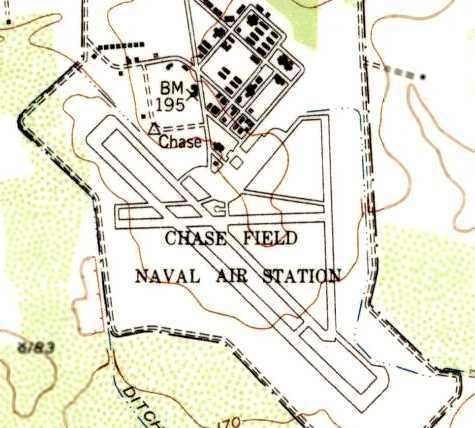
Chase Field was depicted on the 1954 USGS topo map with a northwest/southeast runway
that had been considerably lengthened compared to the field's original WW2 configuration.
Dublin recalled, “Chase Field... I was an Airman stationed there from late 1959 until November 1960.
Originally assigned to the air station, worked at the Axillary Store in VT24. The SUPO was Cdr. M.A. Link.
I was selected to report to VT-26 that flew the F-11 'Flying Stovepipe'.
One of our aircraft 'shot itself down' during a bombing run on a towed spar.
In December 1959 we actually had snow! Not a big thing to me, being from NY State,
but I recall a sailor from southern California that had never seen snow out making 'snow angels' in his skivvies! Good times!”
A 1/22/69 article from The Beehive (courtesy of Ford Lauer) described renovation projects at Chase.
It mentioned the VT-24 & 25 hangars being added in 1954, having been relocated from Rodd Field.
Louie Diot recalled, “I was sent to Chase Field in September 1957
and was assigned to the line at ATU-213, we flew the TV-2.
The other ATU assigned there was ATU-223 & they flew the F9F-8T.”
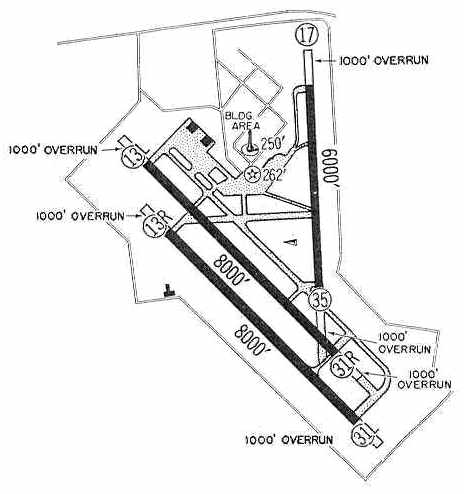
Chase Field was depicted in the 1960 Jeppesen Airway Manual (courtesy of Chris Kennedy)
in its enlarged, jet-capable configuration,
with a total of three paved runways (8,000' Runways 13L/31R & 13R/31L, and 6,000' Runway 17/35),
as well as a number of taxiways, a large ramp, and 2 hangars.
According to USN Cdr Dave Winiker (ret), “NAAS Chase Field
hosted 3 of the Navy's advanced training squadrons (VT-24,25,& 26) in the early 1960s.”
The advanced training was conducted at Chase in TA-4J Skyhawks & T-2 Buckeyes.
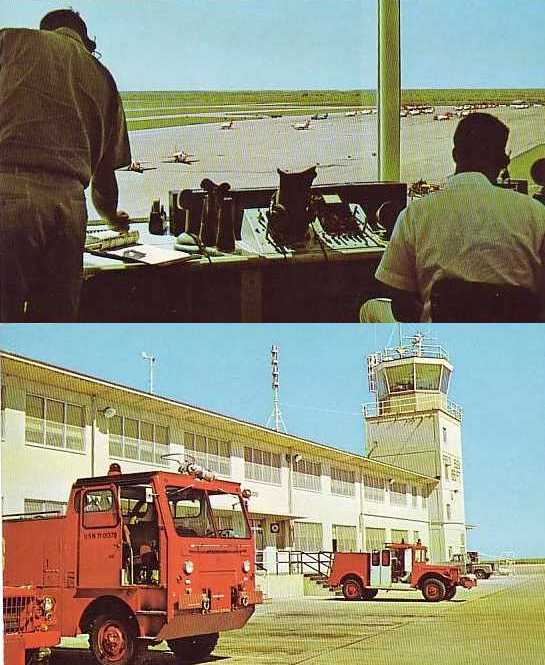
An undated postcard (courtesy of Steve Cruse) of several scenes at Chase Field.
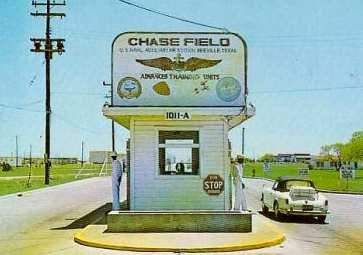
An undated (circa 1960s?) photo (courtesy of Steve Cruse) of the guard shack at the entrance to Chase Field.
Larry Dunbar recalled "a remarkable incident involving a Chase Field aircraft.
I believe it was 3/3/66 when a Grumman F-11 Tiger crashed in Sinton.
This was an incredibly close call for so many people.
The pilot had to eject as the plane had lost it's hydraulics,
and he was not far from my hometown of Sinton. Myself, I was a 7th grader.
This was before air conditioning in every school,
and as it was a beautiful south Texas morning, all the windows in the classroom were open.
All us kids were used to the sound of military aircraft,
as Sinton sat surrounded by Chase, Corpus NAS, and Kinsgville NAS.
But we knew something was wrong as we heard that jet screaming to the ground.
The thing went in vertical, in an alley, between houses, missing the school by a few yards.
The fireball from the explosion shot straight up, and only fences & a few trees were lost.
No deaths or injuries, but a slightly altered descent
would have resulted in what would probably still be Sinton's worst day."
An undated patch from NAS Chase Field.
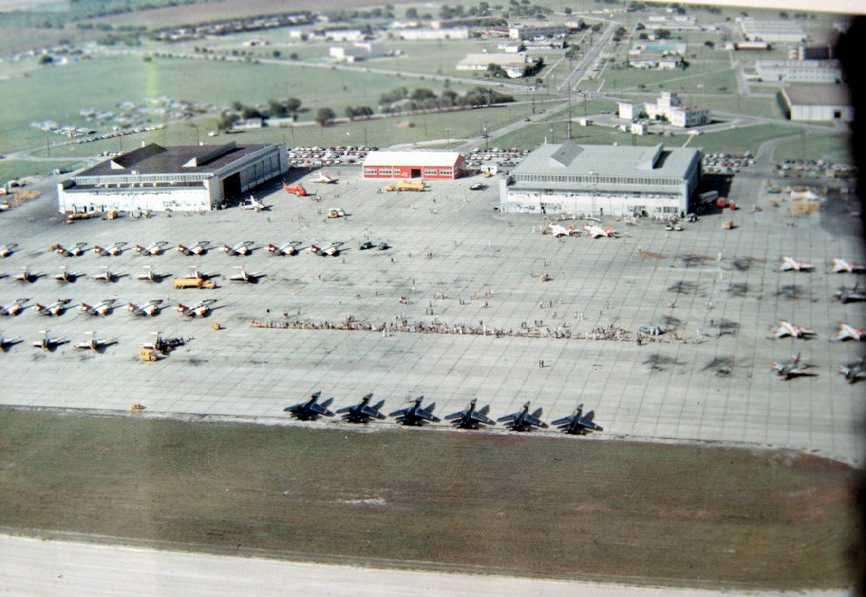
An aerial view by Steve Shanker looking northeast at Chase Field's ramp during the 1967 airshow.
Steve recalled, “I was stationed down there from August 1967 - April 1970 working on the Ops Line crew
as well as being a plane captain on both the UH-34J & UH-2B.”
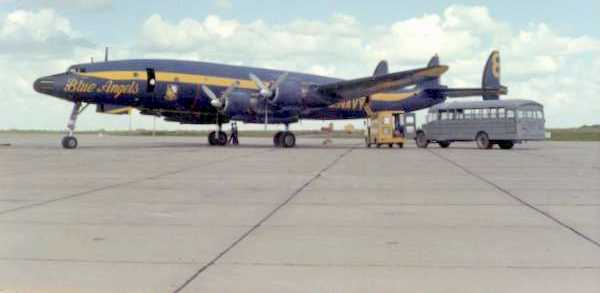
A photo by Steve Shanker of the Blue Angels' C-121 Constellation taken at Chase Field ramp during the 1967 airshow.
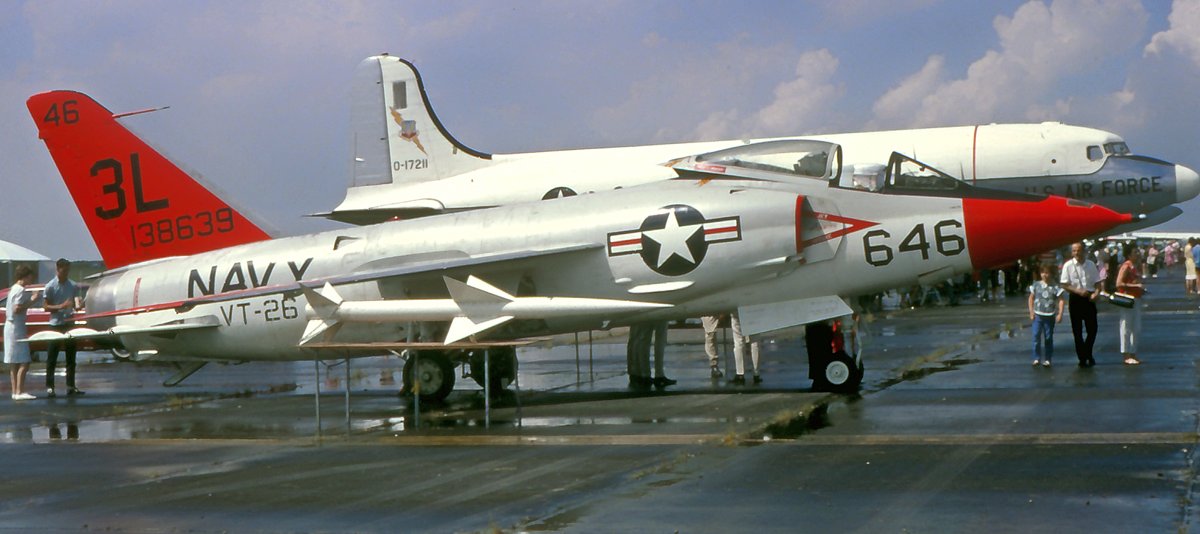
A Grumman F11F-1 Tiger & an early Sparrow missile on display at Chase Field during the 1968 airshow.
Mark Webb recalled, “I was stationed at Chase from 1967-69.
The old WWII prefab enlisted housing... that’s where my wife & I lived in the small little cracker boxes.
We paid a whopping $30 a month for rent. Some referred to the housing unit as 'Splinterville'.”
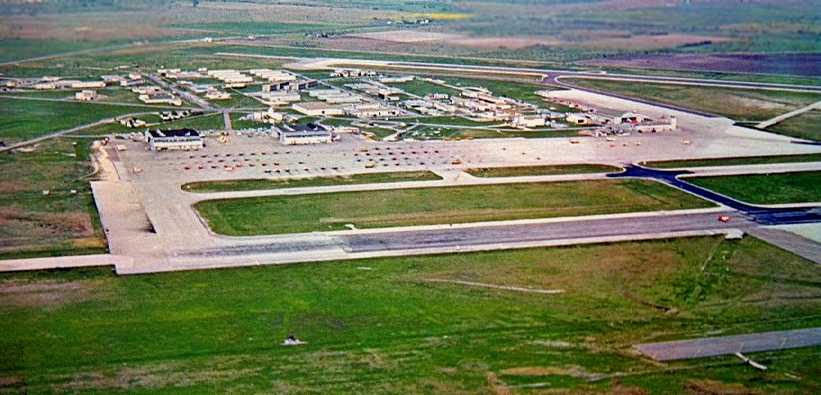
A circa 1960s aerial view looking east at Chase Field (courtesy of Steve Shanker).
Gerald Cochrane recalled, “I was stationed at NAS Chase in the middle of 1969 at TRARON 25 (Training Squadron 25) or VT-25.
I worked first as a Plane Captain, then Petty Officer in charge of flight crews,
then as ground tower officer (after the birds landed the main tower would hand the incoming bird over to me
and I would direct him to parking & take any maintenance info).
I would then hand that info over to the flight line Petty Officer
and he would assign a plane captain to park that bird.
We worked 10-12 hours per day - it was so hectic that there were many times that we could not eat nor drink.
Even though the temperatures soared to well over 100 degrees daily.
We were a close knit brotherhood & struggled through each day with jet blast hitting us
and sometimes knocking us off the bicycles which many of us used
to get out messages to the crews of men working out on the flight line.
The combination of the blazing sun & the heat from the jet exhaust & the reflection of the sun from the white birds
was nearly unbearable on many days but we considered ourselves serious professionals
and we all had a great deal of pride in our abilities.”
Gerald Cochrane continued, “There were 2 others Squadrons at Chase Field as well, VT-24 & VT-26.
When I arrived at Chase, all the birds there were TF-9 Panthers & TF-9 Bakers, 2-seat / 1-seater,
these were relics of the Korean Conflict but make no mistake about it,
they were fast & devastating on the gunnery range down in Freer TX.
With 20mm nose cannons & rocket pods under their wings they could quickly destroy ground or air targets
and could pull an amazing 9 Gs without going through maintenance upon their return.
That is a huge amount of Gs back in those days.
The F-9s were made by Grumman & had centrifugal flow engines (these needed to be wound up all the way to suck a man into the intake)
which differ from axial flow engines (these could suck a man up off the deck from six feet away at idle).
The T-2s came latter as the war wound down.”
Gerald Cochrane continued, “We met many ace heroes from Viet Nam who came to our station out of mechanical or other reasons.
Two of whom shot down 2 MiG's while flying Spads (A-1 Skyraiders), a really old propeller drive plane from an even earlier war.
Their story was amazing.”
Gerald Cochrane continued, “I was there at Chase when Hurricane Celia came ashore & Tropical Storm Fern followed within hours.
Tropical Storm Fern was the most devastating to us.
My crew & I towed in 60 jet aircraft while the rain fell at such a ferocity
that the water was a foot deep on a flat concrete surface & lightning bolts fell like rain.
One lightening bolt struck the tail of a plane we were towing & went through the body of an airman named Whirley from WV.
I caught him before he hit the ground. He survived & ended up marrying one of the richest women in that part of TX.
Who says getting struck was bad luck?”
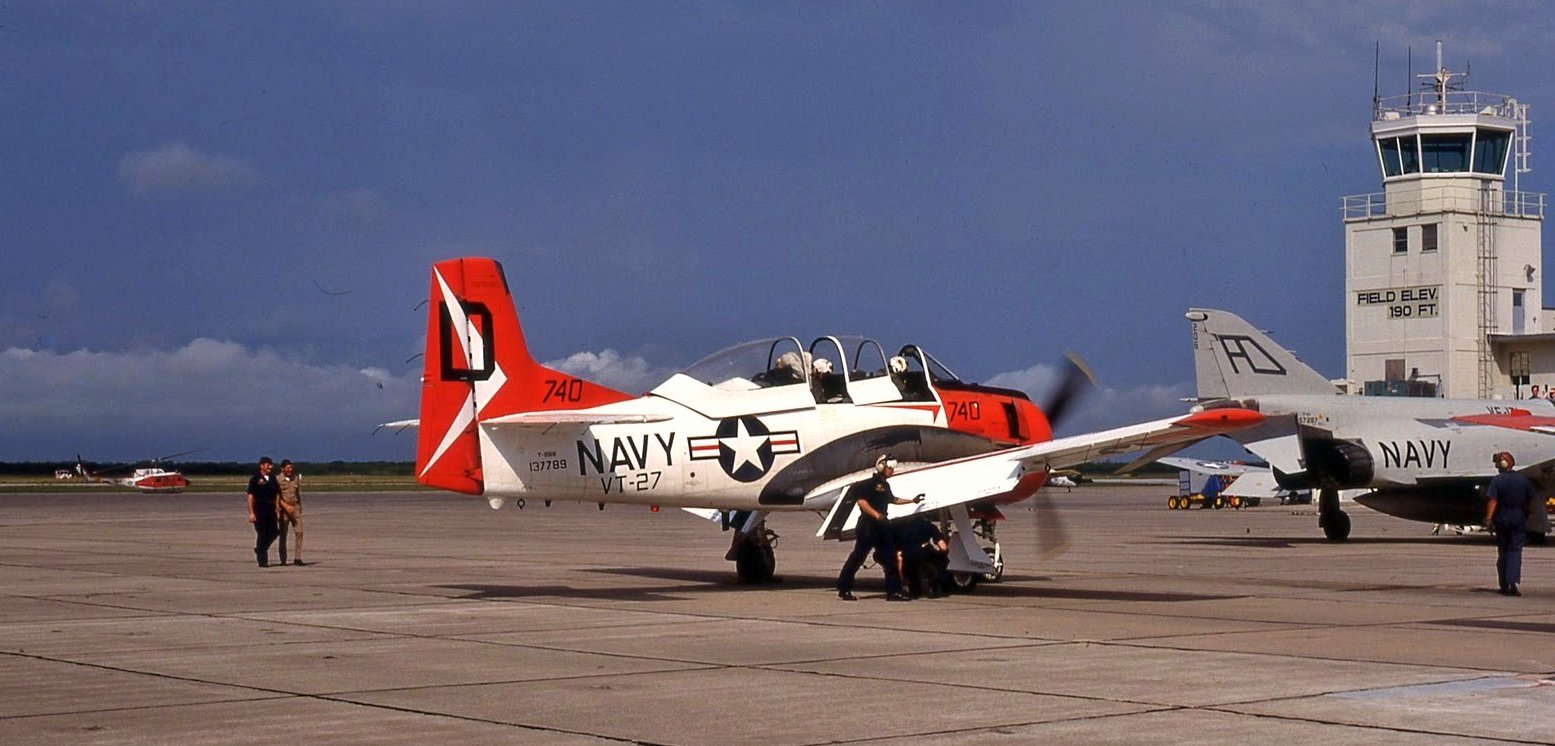
A 1970s photo of a VT-27 North American T-28B Trojan at Chase Field.
By the early 1980s, Chase Field had a complement of 2,500, along with over 160 aircraft.
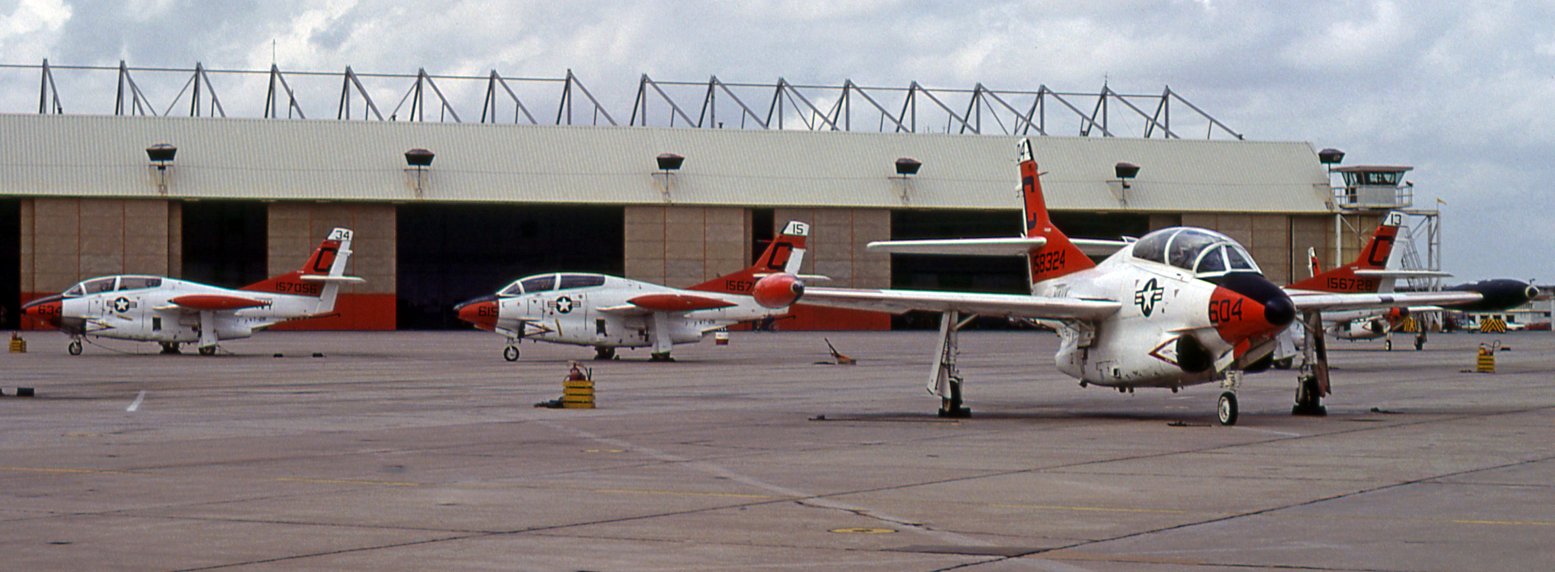
A 10/8/82 photo of VT-26 Navy T-2C Buckeyes at Chase Field.
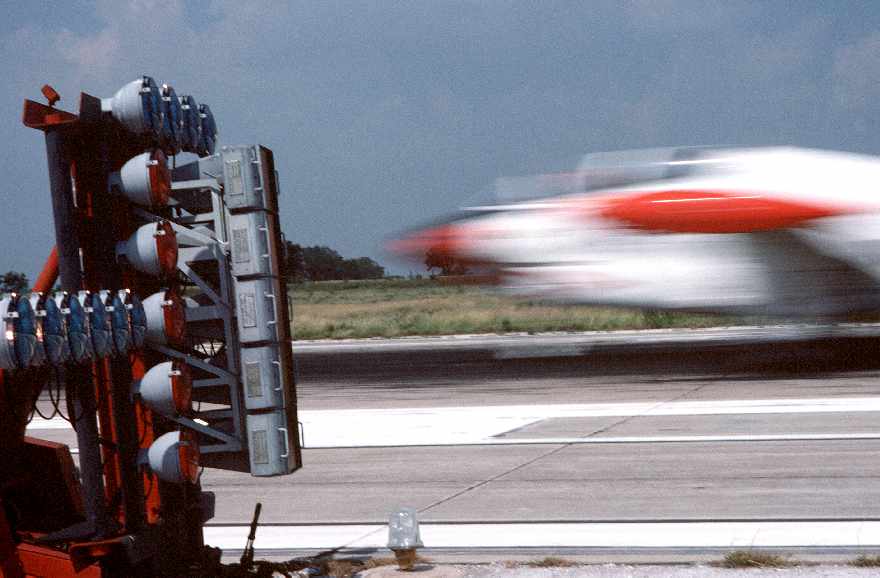
A 6/1/89 DOD photo by Scott Allen of a Navy T-2C Buckeye flashing past a Fresnel lens optical landing system as its student pilot makes a practice carrier landing at Chase Field.
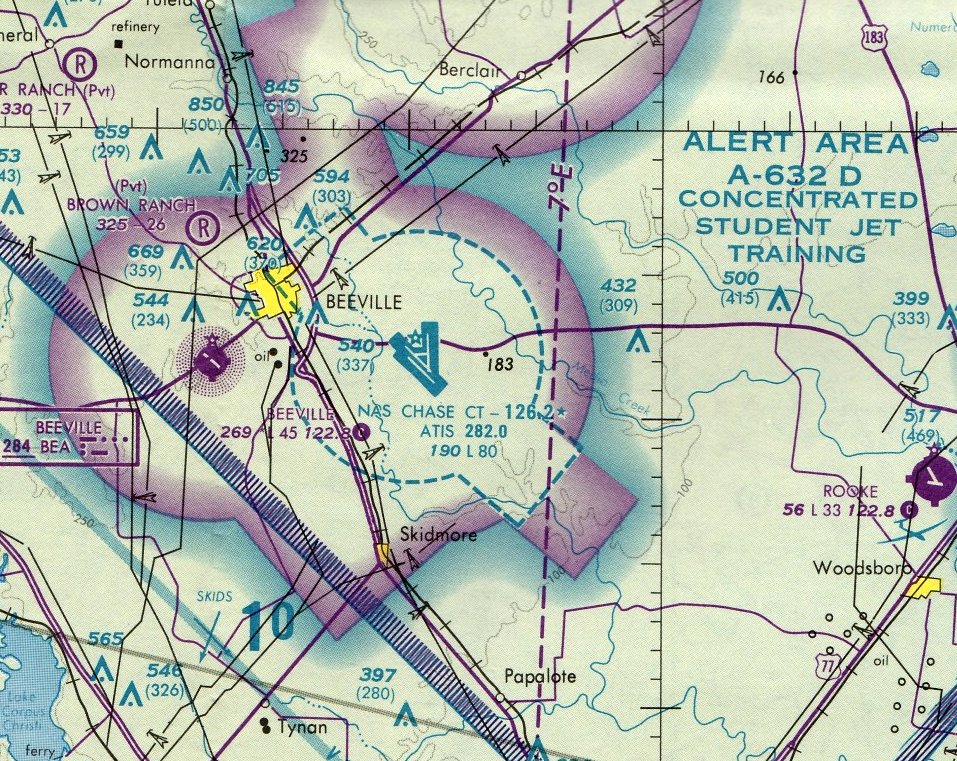
The June 1989 San Antonio Sectional Chart depicted “NAS Chase” as having 3 paved runways, the longest being 8,000'.
Chase Field was identified for closure during the 1991 Base Realignment & Closure process, and shut its gates in 1993.
The May 1993 San Antonio Sectional Chart depicted Chase Field as an abandoned airfield.
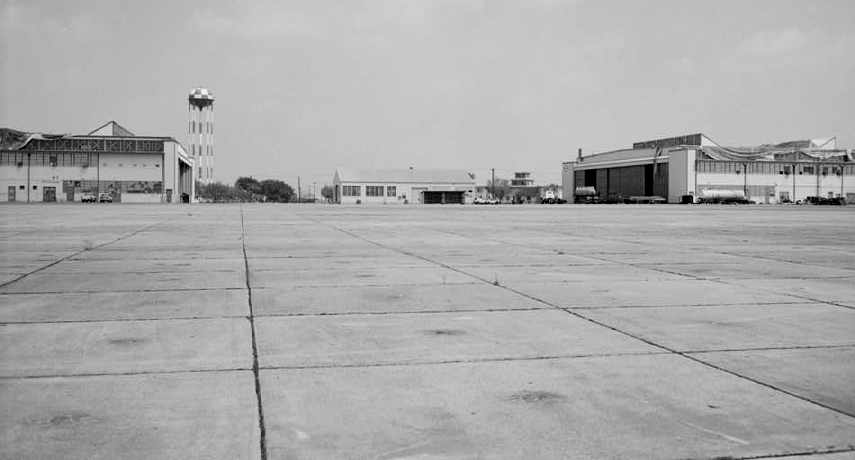
An undated photo of Chase Field's flightline, taken as part of the Historic American Buildings Survey/Historic American Engineering Record.

An undated photo of Chase Field's Building 1015, a hangar formerly used by Training Wing 3.
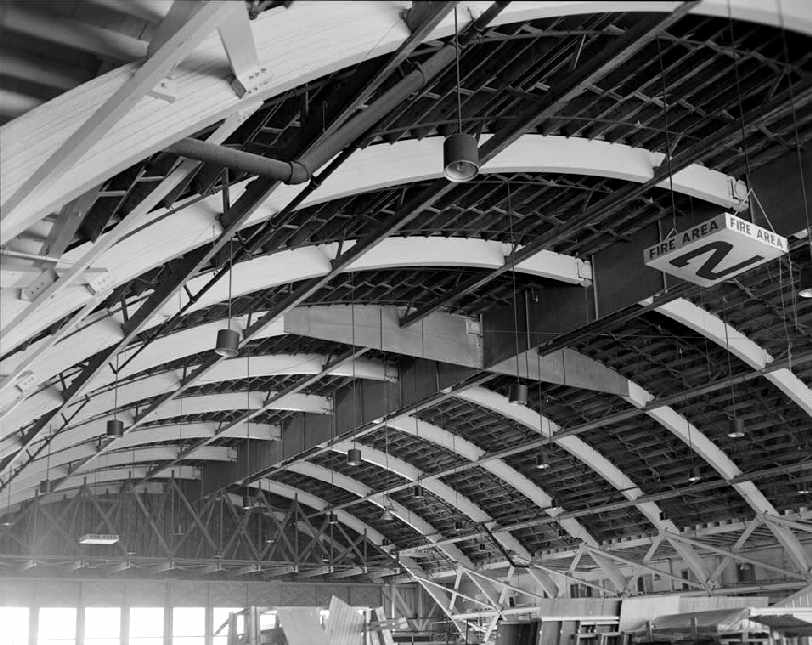
An undated photo of the hangar roof trusses of Chase Field's Building 1015.
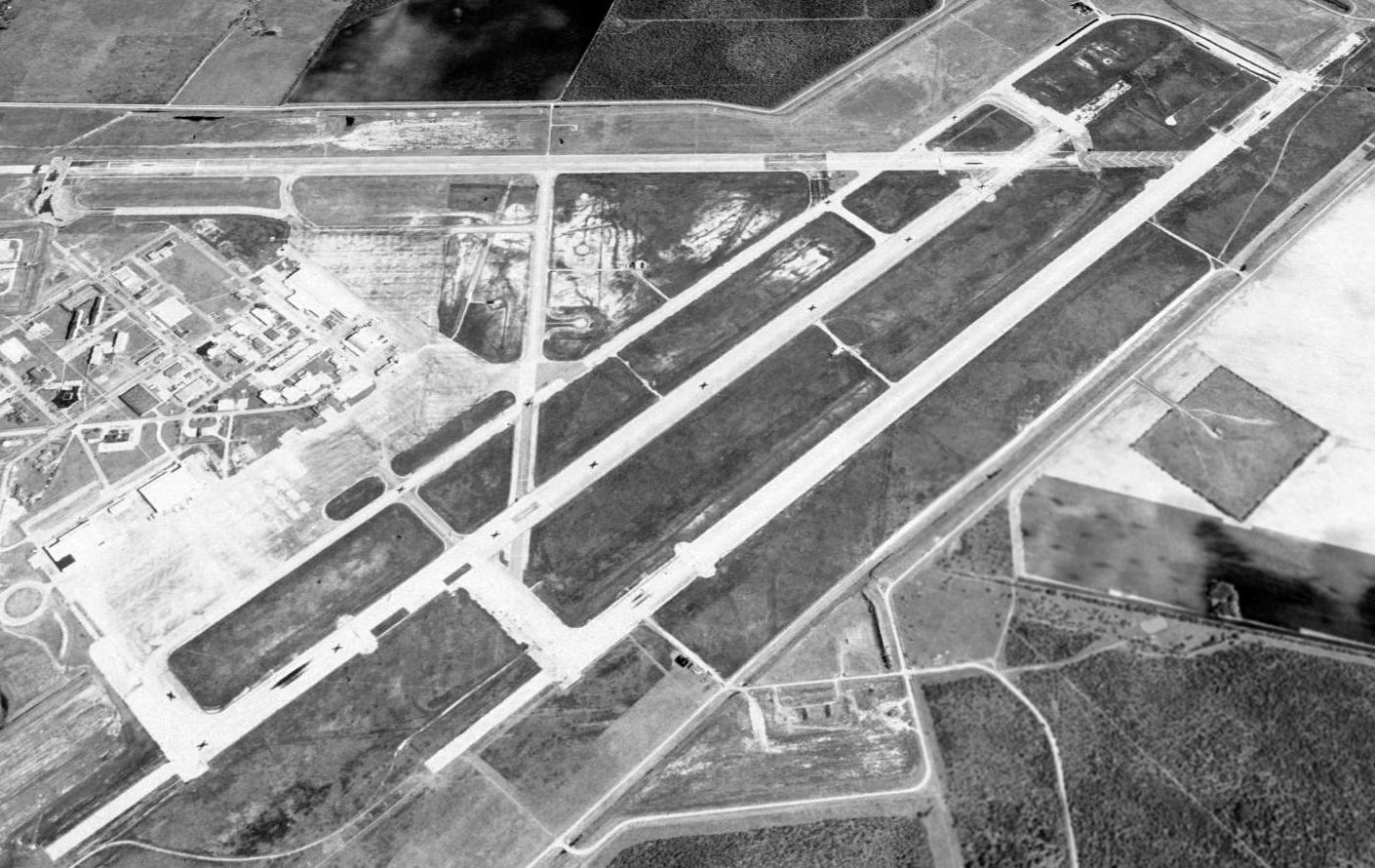
A 1995 USGS view looking east at Chase Field.
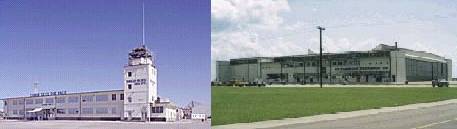
Two 1990s views of the Operations Building & Tower, and Hangar 24.
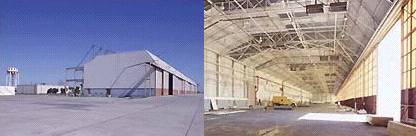
Two 1990s views of Hangar 26's exterior & interior.
As of the 1990s, Chase Field had not been reused as a civilian airfield, even though the extensive facilities remained in excellent shape.
Most of the non-aviation buildings of the base were taken over by the Texas Department of Criminal Justice, which operated a prison on the site.
The local government was trying to redevelop the remainder of the base as the Chase Field Industrial Park.
Chase Field was depicted as an abandoned airfield on current Sectional Charts.
In the words of Navy pilot Mike Strobach, Chase is "a big, beautiful field. We practice low approaches there for training.
At least once since I've been stationed here, somebody has landed there due to an emergency.
Rumors arise from time to time that the Navy will again use the field as an OLF to alleviate congestion at the other Corpus-area airports.
Probably just rumors, but it sure is a waste of a great field."
Scott Beadle reported in 2003, "This summer I flew skydivers at the dropzone in Beeville Texas.
During my checkout with the owner, the old Beeville NAS was pointed out as a good alternate landing site.
On the current San Antonio sectional it is listed as an abandoned airfield.
There is no description, which is confusing because it is a huge landmark.
The hangars & runways remain in good condition as far as I could see."
An article entitled “Beeville wins aircraft firm, 300 jobs” by Fanny Chirinos
appeared in the December 31, 2005 Corpus Christi Caller-Times (courtesy of Steve Cruse).
“Aviation returns to Beeville after almost a 13-year absence
and is expected to bring more than 300 jobs, Bee County officials announced Friday.
A lease agreement was signed Friday afternoon between Chicago-based military subcontractor Kay & Associates Inc.
and the Beeville Development Authority.
Kay will occupy 2 hangars at Chase Field Industrial Park, formerly Naval Air Station Chase Field.”
“This is huge for the area”, said Laura Fischer, president of the authority.
“We have been trying to get aviation to Beeville since the base closed.
We're expecting initial work to begin in the next couple of months. Kay should be fully operational by mid-summer.”
The article continued, “Kay has a contract with the Department of Defense to repair helicopters
and has a 1-year lease with four 1-year options, Fischer said.
The authority anticipates an average employee salary of $40,000 & an annual payroll of $12 million, she said.
Company vice president Brad Kay said the company was having a lease signing
but he would not offer further details, saying the company awaits a news release from the Army, one of its clients.
According to its Web site, Kay provides organizational, intermediate & depot-level repair
on an extensive range of platforms, which includes Army helicopters.”
The article continued, “The Beeville authority has spent almost $3 million
repairing the hangars & runways in the past 6 months, Fischer said.
One hangar is near completion & the second hangar should be completed by summer, she added.”
Beeville Mayor Kenneth Chesshir said the effort has been worth it.
“We've had a lot of foul balls & this is the first time we've hit a home run”, Chesshir said. “The number of jobs is huge for this area.”
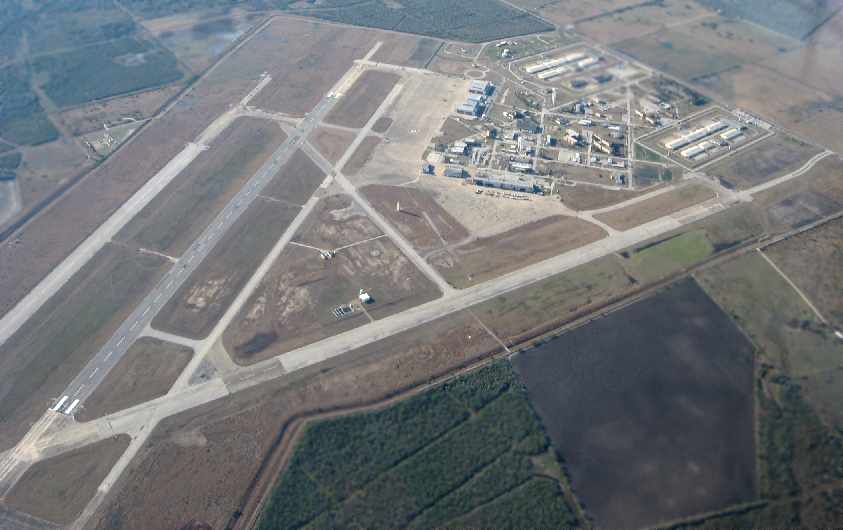
A January 2007 aerial view by Lex Ramsey looking northwest at Chase Field.
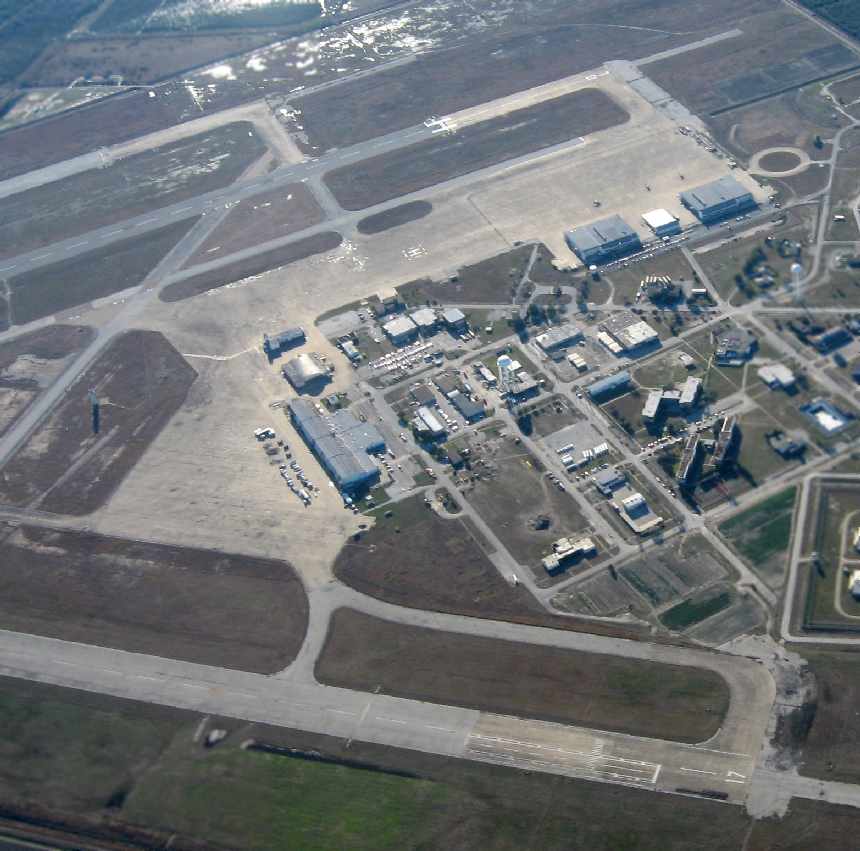
A January 2007 aerial view by Lex Ramsey looking southwest at Chase Field, showing the huge amount of aviation infrastructure which remains intact at this facility.
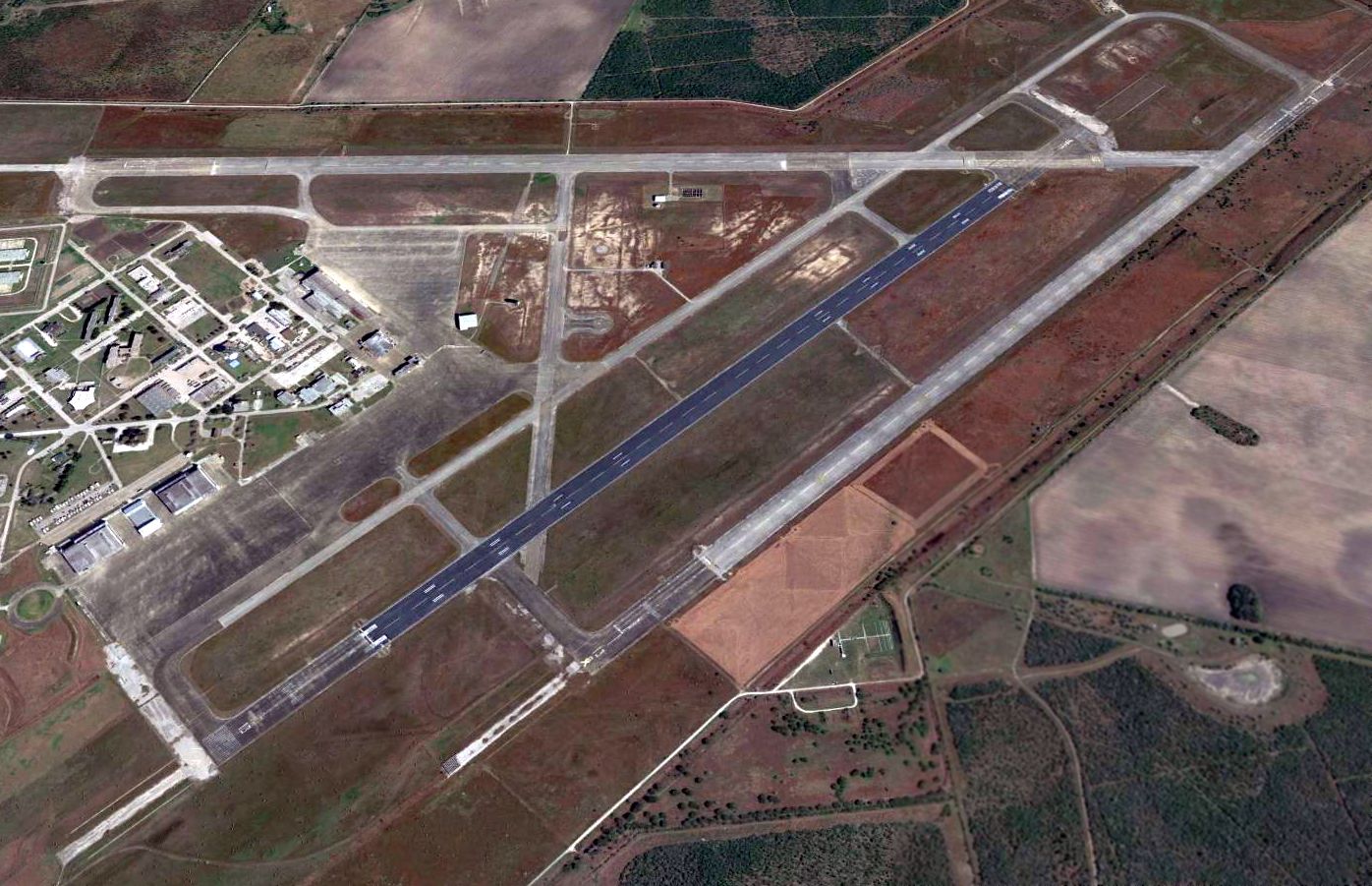
A 2016 aerial view looking east at Chase Field.
See also: The Handbook of TX Online.
____________________________________________________
Travland Airport, Beeville, TX
28.425, -97.763 (North of Corpus Christi, TX)

Travland Airport, as depicted on the January 1944 San Antonio Sectional Chart.
Travland Airport, on the northwest side of Beevile, was evidently established at some point between 1942-44,
as it was not yet depicted on the 1942 San Antonio Sectional Chart.
The earliest depiction which has been located of Travland Airport was on the January 1944 San Antonio Sectional Chart.
It depicted Travland as a commercial/municipal airport.
The earliest photo which has been located of Travland Airport was a 1951 aerial view.
It depicted Travland as having 2 unpaved runways, with 1 light single-engine aircraft & 4 T-hangars on the north side.

The earliest photo which is available of Travland Airport was a 10/3/52 USGS aerial view.
It depicted Travland as having 2 unpaved runways, and 4 T-hangars & possibly 3 light single-engine aircraft on the north side.

The only topo map depiction which has been located of Travland Airport was on the 1954 USGS topo map.
It depicted Travland as having 2 unpaved runways, with a small building on the north side.
The last photo which has been located showing Travland Airport in operation was a 1958 aerial view.
It depicted Travland as having 2 unpaved runways, with 1 light single-engine aircraft & 4 T-hangars on the north side.

The last depiction which has been located of Travland Airport was on the January 1968 San Antonio Sectional Chart.
It depicted Travland as having a 3,000' unpaved runway.
Scott Ashmore recalled, “Travelers Field in Beeville was right along the tracks that ran through town, right off [Routes] 181 & 59. It was grass field.
The local volunteer fire department had photos of some of the crashes there. Apparently it was closed down because too many pilots hit the wires above the tracks at the end of the runway.”
Travland Airport was evidently closed at some point between 1968-72,
as it was no longer depicted on the 1972 San Antonio Sectional Chart.
A 1974 aerial view depicted Travland Airport after its closure. The runways were no longer distinct, and a few of the T-hangars had been removed at some point between 1958-74.
Scott Ashmore recalled, “In 1985 one of the hangars was still there.”
A 1995 aerial view appeared to show that the last Travland Airport hangar was removed at some point between 1985-95.

A 2023 photo looking south at a Travland Airport hangar foundation, and the airfield area in the background.

A 2023 aerial view shows the Travland Airport site remains mostly unredeveloped, with the hangar foundation on the north corner as its only remaining trace.
The site of Travland Airport is located southwest of the intersection of Orange Lane & North Airport Road, appropriately enough.
Thanks to Scott Ashmore for pointing out this airfield.
____________________________________________________
Or if you prefer to contact me directly concerning a contribution (for a mailing address to send a check),
please contact me at: paulandterryfreeman@gmail.com
If you enjoy this web site, please support it with a financial contribution.
____________________________________________________
This site covers airfields in all 50 states.